
[Back] [Next]






____________________



____________________
|
|
____________________ |
Our Lake Martha Association has worked hard over the years to address remedies for problems that affect lakes our size.
Lakeshore Erosion & Phosphours Levels are concerns. Curly-leaf pondweed is an exotic plant that had grown to nuisance conditions in our lake. When curly-leaf dies back in early summer, phosphorus is released from the decaying plant matter and contributes to algae blooms. So what has our Association done to minimize erosion and nuisance curly-leaf conditions that impact on our waters? Projects to physically remove Aquatic Invasive Plants and Creatures have been undertaken to improve water conditions.
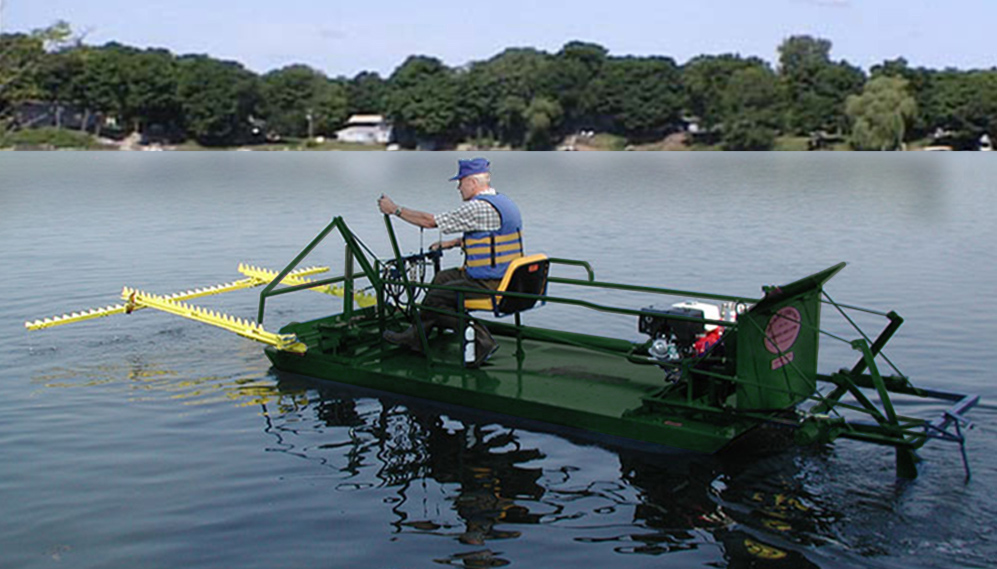
1980's-2004 Weed Harvesting History: We started in 1983 by purchasing 3 used Hockney Mechanical Harvesters (1-Weed Cutting & 2-Rake), to physically cut & remove curly-leaf from in front of each members' property. We completly abandoned using the Cutter and Rake Boats after 20 years of increasing problems maintaining the equipment. Since those times some residents have been treating their shorelines using Herbicide control methods and applying copper sulfate on shorelines with restrictive individual DNR permits.
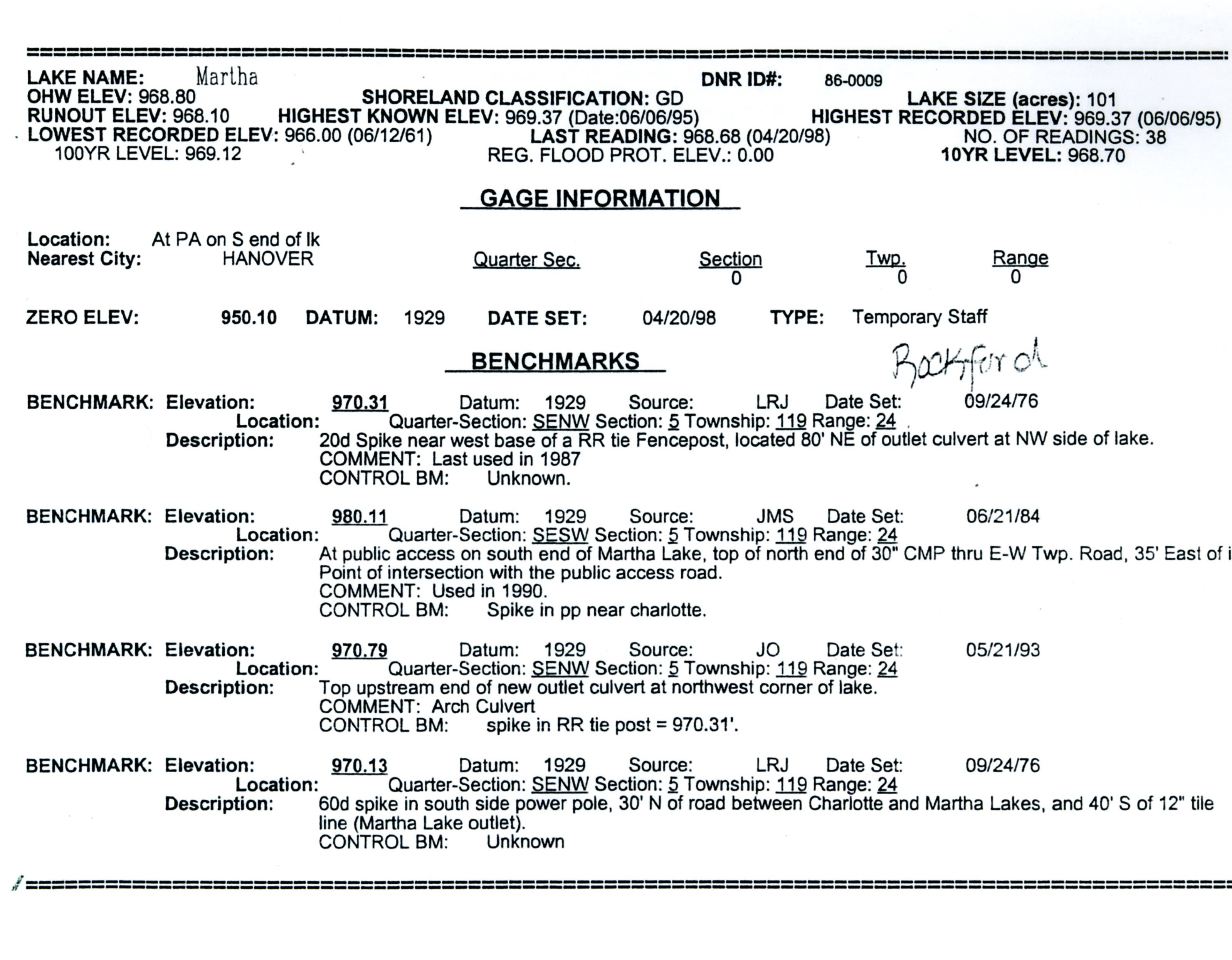
1987-89 During Lower Water Levels: Another of our early Projects was to address shoreline erosion, the "Digging & Damming Era" problems. In 1989 the Martha & Charlotte Associations got together to finally attempt to resolve the problem. They shared the expense of installing a permanent concrete arch culvert at the Martha outlet. This was placed at an elevation 7in below Ordinary High Water Level(OHW) at 968.1 MSL(Mean Sea Level) as prescribed and installed by the Department of Natural Resources. This settled the problem no more Digging and Damming Era. Jeff Kennedy & Frank Forsberg were Association Leaders that were instrumental for completion of this project.
1991-1992 (LateFall)-EarlySpring): By evaluating the relationship between curlyleaf growth and lake sediment characteristics, it was found that lakes with naturally high sediment iron concentrations had low curly-leaf densities. So our association (First in MN) with guidance from DNR & "Clear Water Technologies" in 3 phases, drilled thousands of holes through the ice and treating our lake sediments with many tons of Magnetite to help "tie up" the phosphates that had accumulated in the bottom sediments over the years.
2001: Under the guidance from DNR & "Clear Water Technologies" we conducted a re-treatment. On (4/7/2001) we spread, to lake sediments, an additional 13 tons of Magnetite to satisfy the "guarantee" of the 1991-92 treatments.
2001: Our Lake along with Lake Charlotte and Beebe completed the (CMSSD) project to replace individual septic systems with "City Sewer" to comply with county and state regulations.
2013: Wright Soil and Water Conservation District in conjunction with the University of Minnesota St. Anthony Falls Laboratory installed the "Minnesota Filter". This removes approximately 12 pounds (as much as 80%) of phosphorus annually, from the southwest part of our agricultural watershed runoff, before entering Martha's waters. It was projected to last for 25-30 years but stopped working in about half of projected life span. A repair/recharge is anticipated.
2019: We added and continue to fund operation of 3 aeration units. These units increase dissolved oxygen levels and reduce "anoxic days" helping the health of fish and other beneficial organisms aiding natural processes for the lake health, water quality and clarity.
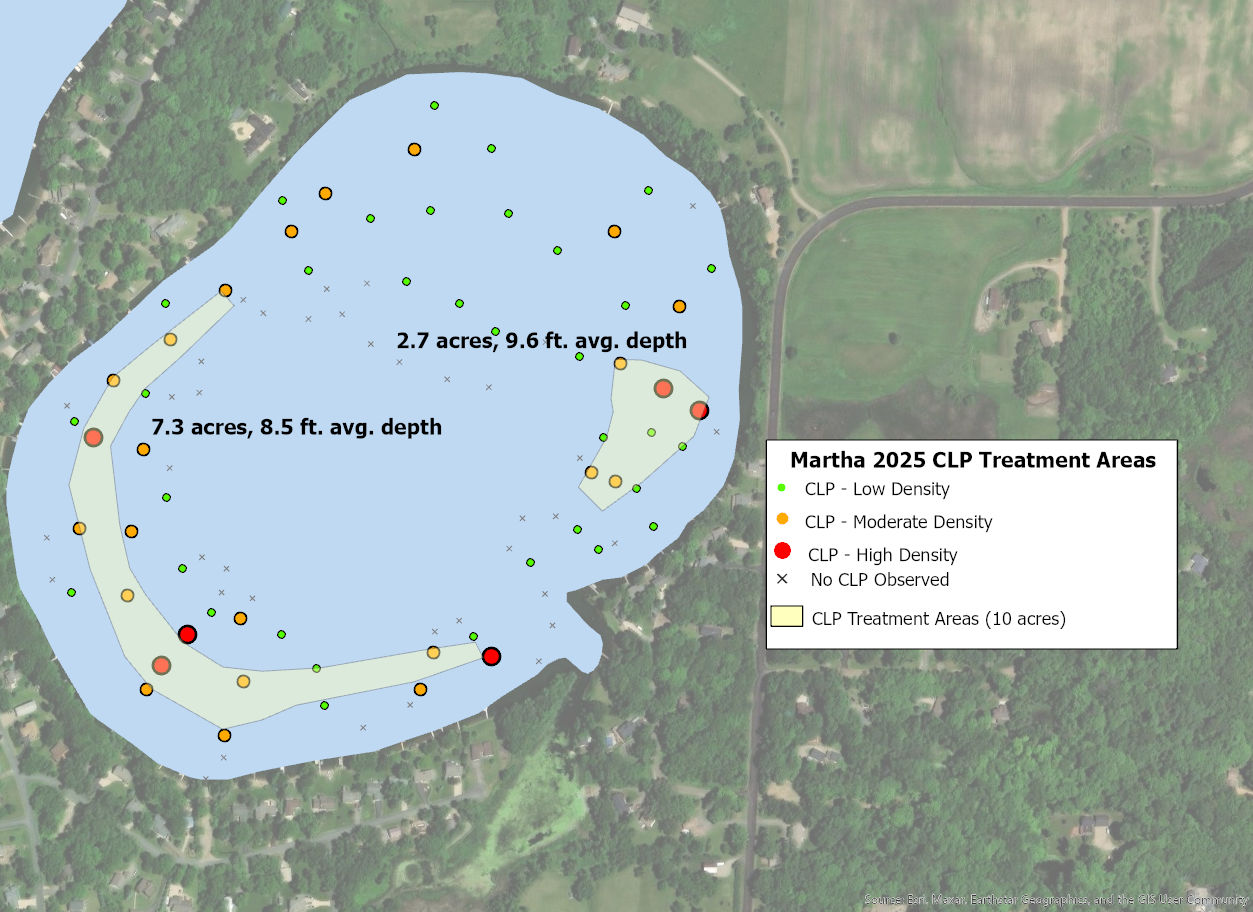
2021-Now: Each of these years our Association has voted in favor of a "whole lake" (upto 11 Acres) approach vs indivudual, for treating the invasive curly-leaf, with encouragement and direction from the DNR. Curly-leaf was once under better control, but we had never attacked some larger patches of invasive curly-leaf, and has continued overpowering and choking out the more beneficial natural vegitation, causing deterioration of our lake bottom and water clarity. The Association will continue yearly assessment and direction from the DNR with plans to use the services of "Aquatic Solutions" to purchase and apply the Herbicide needed to target this invasive specie.
2026: Water Clearity Problems are being addressed through CLP treatments, aeration units, improvement of Watershed runoff, lawn care & wake management. We also need to address internal Phosphorus found in the lake sediments(muck). Lake Martha has a high number of "anoxic days" when phosphorus is released into the water contributing to algae blooms. These impaired conditions impact non-invasive aquatic life and recreation due to excess total nutrients. Therefore Lake Martha is a good canadate for internal phosphorus load management through "alum dosing". Read the 2yr report 2024-25 Martha Lake Evaluation
_________________
Our Association seeks to raise enough money each year, as needed and approved, to fund new and continuing projects.
If you are one of the 50 Lake Shore owners or Association Member click on this Link.
_________________
1998-2001 Sewer District Project
2015 Aquatic Plant Community of Lake Martha
2019 3-diffuser DYI Aeration System proposal
2020 Curly-leaf Pondweed (CLP) Delineation Report
2021 First "Whole Lake" Curly-leaf Pondweed Treatment
2024 Curly-leaf Pondweed (CLP) Delineation Report
2025 Curly-leaf Pondweed (CLP) Delineation Map
2024-25 Martha Lake Evaluation
_________________
Another Lake Iron Treatment Study
_________________